
Audit Fees in Qatar: How Much Does an Audit Cost?
Every company in Qatar faces the same question at year-end: how much will the audit cost? Audit fees in Qatar vary widely. A small trading company may pay
Details
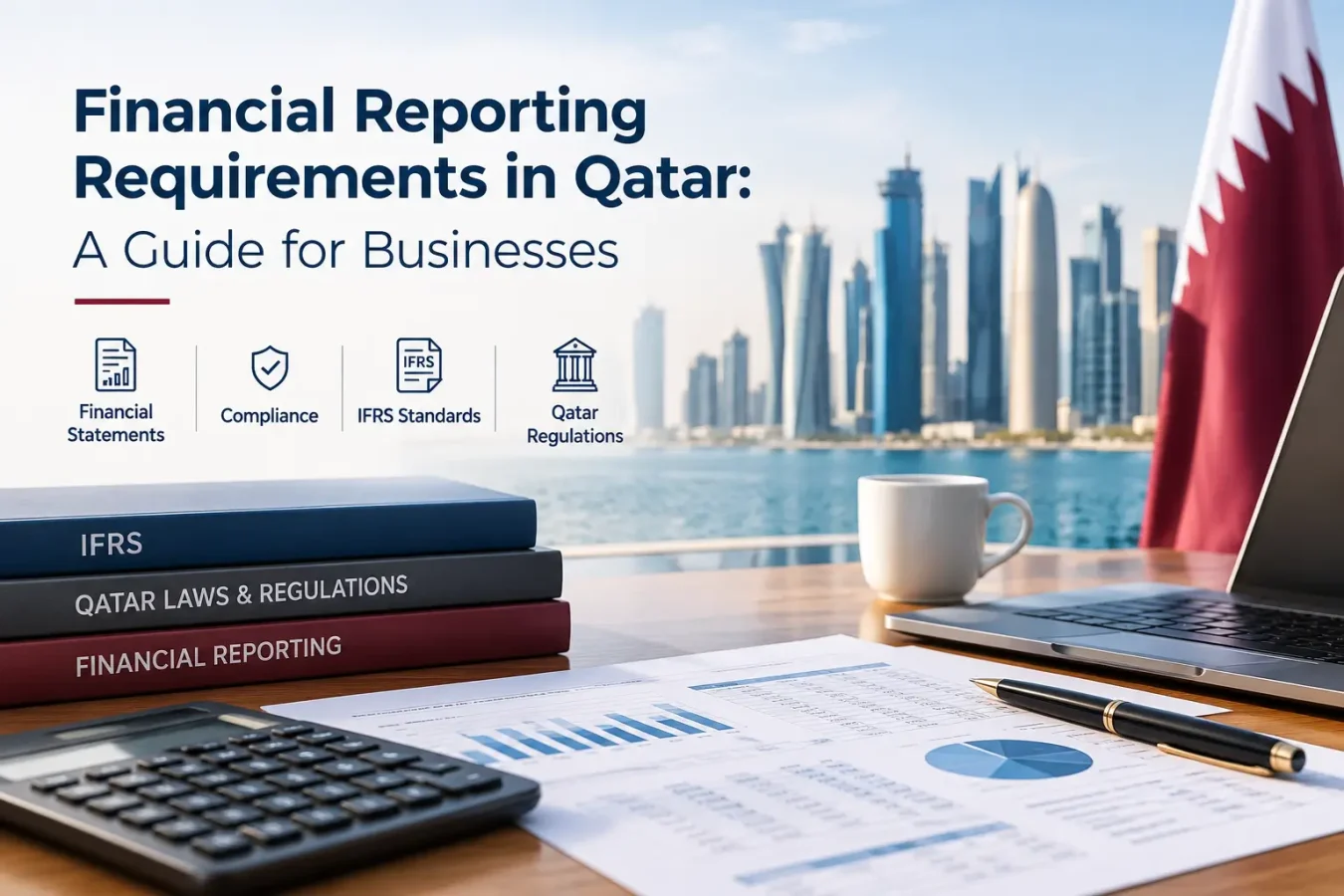
Qatar has become one of the most attractive business destinations in the Middle East. Its stable economy, investor-friendly reforms, and strategic location draw companies from every corner of the world. However, success in this market depends on more than strong sales. It also requires accurate, timely, and compliant financial reporting supported by professional Accounting Services in Qatar.
Financial reporting in Qatar is governed by a clear set of laws, regulators, and accounting standards. Whether you run a mainland LLC, a branch of a foreign company, or an entity in the Qatar Financial Centre (QFC), you must prepare reliable financial statements and submit them on time. Getting this wrong can lead to penalties, tax disputes, and damage to your reputation.
In this guide, Excel Consultants & Partners LLC explains the core financial reporting requirements in Qatar. You will learn which laws apply, how IFRS in Qatar works, which financial statements you must prepare, and how to stay compliant year after year.
Financial reporting in Qatar does not come from a single rulebook. Instead, several laws and authorities work together. Understanding who regulates your business is the first step toward compliance.
The Commercial Companies Law is the foundation for corporate reporting. It requires companies to keep proper books of account, appoint an external auditor and present annual financial statements to their shareholders or partners. Public shareholding companies must also submit IFRS-compliant financial statements to the Ministry of Commerce and Industry.
The Income Tax Law and its Executive Regulations link financial reporting directly to tax compliance. The General Tax Authority (GTA) uses your financial statements as the starting point for calculating taxable income. Returns and supporting statements are filed through the Dhareeba online tax portal.
Some businesses face extra reporting rules from specialised regulators:
Each regulator may require additional disclosures, specific formats or earlier deadlines. Knowing which authority applies to you prevents costly surprises.
Qatar has adopted International Financial Reporting Standards (IFRS), issued by the International Accounting Standards Board (IASB), as its primary framework. The tax law requires accounts to be prepared under IFRS, and the QFMA applies the same standard to listed companies. In practice, IFRS in Qatar is the benchmark for almost every registered business.
IFRS gives investors, banks and regulators a common financial language. Statements prepared under these accounting standards in Qatar are easy to compare with those of companies in Europe, Asia and the rest of the GCC. This builds trust and makes it easier to raise funds or attract foreign partners.
Several standards often create challenges for local businesses:
Smaller entities may, where regulators accept it, use IFRS for SMEs, a simplified version with fewer disclosures. Confirm eligibility with your auditor before switching frameworks.
A complete set of financial statements in Qatar follows the IFRS structure. Each component tells a different part of your company’s financial story.
| Statement | What It Shows |
| Statement of Financial Position | Assets, liabilities and equity at year-end |
| Statement of Profit or Loss and Other Comprehensive Income | Revenue, expenses and profit for the year |
| Statement of Changes in Equity | Movements in capital, reserves and retained earnings |
| Statement of Cash Flows | Cash from operating, investing and financing activities |
| Notes to the Financial Statements | Accounting policies, judgements and detailed disclosures |
For tax purposes, the GTA requires financial statements to be submitted in Arabic for taxable years starting on or after 1 January 2020. Amounts should also be presented in Qatari Riyals (QAR). Companies with an English-only set will need a certified Arabic version before filing.
Preparing accurate statements is only half the job. You must also have them audited, where required, and filed on time.
Under the tax rules, a company’s corporate income tax return must include audited financial statements if any of these apply:
Companies wholly owned by Qatari or GCC nationals are generally exempt from income tax but must still file a return. Those with capital of QAR 1 million or more, or annual revenue of QAR 5 million or more, must attach audited financial statements. Smaller exempt entities can file a simplified return. The audit must be performed by an auditor licensed to practise in Qatar.
| Requirement | Rule |
| Tax return and financial statements | Within 4 months of the financial year-end (30 April for a December year-end) |
| Tax payment | Due on the same date as the return |
| Corporate income tax rate | 10% on taxable profits of foreign-owned shares |
| Listed companies | Publish financial statements at least 15 days before the AGM |
| Record retention | Keep books and documents in Qatar for 10 years |
Large multinational groups should also note Qatar’s global minimum tax rules under Pillar Two. Groups with consolidated revenue of EUR 750 million or more face a 15% minimum effective tax rate and extra reporting obligations.
The Qatar tax law includes a penalty regime for late filing, late payment and inaccurate returns. The GTA may also reject a return that lacks audited statements or an Arabic version. Beyond fines, poor reporting can delay commercial registration renewals, block government tenders and weaken your standing with banks.
Many businesses struggle with the same issues: limited in-house IFRS knowledge, poor month-end discipline, missing documentation and last-minute audits. The good news is that each problem has a practical fix.
At Excel Consultants & Partners LLC, we provide end-to-end financial reporting services designed for businesses operating in Qatar. Our team combines deep IFRS expertise with practical knowledge of local regulations, so you can focus on growth while we handle compliance.
Our services include:
Whether you are a start-up, an SME or a multinational branch, we tailor our approach to your size, sector and regulator.
Financial reporting in Qatar is more than a legal formality. It is a tool for building trust with investors, banks and regulators. By following IFRS, meeting audit thresholds, filing within four months and keeping records for ten years, your business can avoid penalties and grow with confidence.
Need help with your next reporting cycle? Contact Excel Consultants & Partners LLC today for expert, reliable financial reporting services in Qatar.
IFRS is the required framework for tax filing, listed companies and regulated financial institutions, so most companies in Qatar use it. Some smaller entities may use IFRS for SMEs where regulators accept it. QFC entities follow QFC rules, which also rely on IFRS.
Tax returns and supporting financial statements are due within four months of the financial year-end. For a 31 December year-end, that means 30 April of the following year. Tax payable is due on the same date.
It depends on ownership and size. Foreign-owned companies need audited statements if capital exceeds QAR 200,000, income exceeds QAR 500,000, or the head office is abroad. Qatari and GCC-owned companies need an audit if capital reaches QAR 1 million or revenue reaches QAR 5 million.
Yes. For taxable years starting on or after 1 January 2020, the GTA requires financial statements to be submitted in Arabic. Many businesses prepare an English set for management and a certified Arabic version for filing.
Multinational groups with consolidated revenue of at least EUR 750 million must apply a 15% minimum effective tax rate in Qatar. This brings additional data collection, calculations and disclosures. Affected groups should review their reporting systems early to meet the new obligations.
Qatari Business Owners, Entrepreneurs, and Business Managers get in touch with Excel Consultants & Partners LLC now for a free consultation.
Get free consultation!Every company in Qatar faces the same question at year-end: how much will the audit cost? Audit fees in Qatar vary widely. A small trading company may pay
DetailsRunning a business in Qatar means more than making sales and paying staff. Every year, most companies must prove their numbers are accurate. That proof comes from a
DetailsEvery growing business in Qatar reaches a point where someone asks a simple question. Are our numbers right, and are our controls working? Two types of audit answer
Details
Qatari Business Owners, Entrepreneurs, and Business Managers get in touch with Excel Consultants & Partners LLC now for a free consultation on Accounting Training & Education, Bookkeeping, Audit, Tax, Qatar VA, Business Plans & Feasibilities, HR Consultancy for Accounting, Qatar VAT & VAT Training, Accounting for Ecommerce, and Project Management.