Qatar is one of the fastest-growing business hubs in the Gulf. From startups in Doha’s free zones to established trading companies and international branches, businesses here operate in a market that rewards ambition but demands strict financial discipline. That is why choosing among the many accounting firms in Qatar is one of the most important decisions a business owner will make.
The right accounting partner does far more than record transactions. It keeps your books audit-ready, helps you meet the General Tax Authority’s (GTA) requirements, supports smarter decisions with accurate reports, and frees you to focus on growth. The wrong one can cost you penalties, missed deadlines and poor visibility into your own numbers.
In this guide, we explain exactly how to choose the best accounting firm in Qatar for your business: what to look for, which questions to ask, which red flags to avoid, and why Excel Consultant is a trusted choice for companies across Doha.
Why Your Business Needs Professional Accounting Services in Qatar
Qatar’s regulatory environment has become more structured in recent years. Corporate income tax applies to the foreign-owned share of profits, tax returns are filed electronically through the GTA’s Dhareeba portal, and many companies must submit audited financial statements every year. Qatar has also introduced global minimum tax rules for large multinational groups, and businesses are watching closely for the planned rollout of VAT under the GCC framework.
Keeping up with all of this in-house is difficult, especially for small and mid-sized companies. Professional accounting services in Qatar help you:
- Stay compliant with tax filing, audit and record-keeping rules, and avoid costly penalties.
- Save time and cost compared with hiring and training a full in-house finance team.
- Get accurate financial reporting prepared under International Financial Reporting Standards (IFRS).
- Make better decisions using budgets, cash-flow forecasts and management reports.
- Prepare for growth, whether you are raising finance, opening a new branch or preparing for future VAT.
In short, a good accounting partner turns financial compliance from a burden into a business advantage.
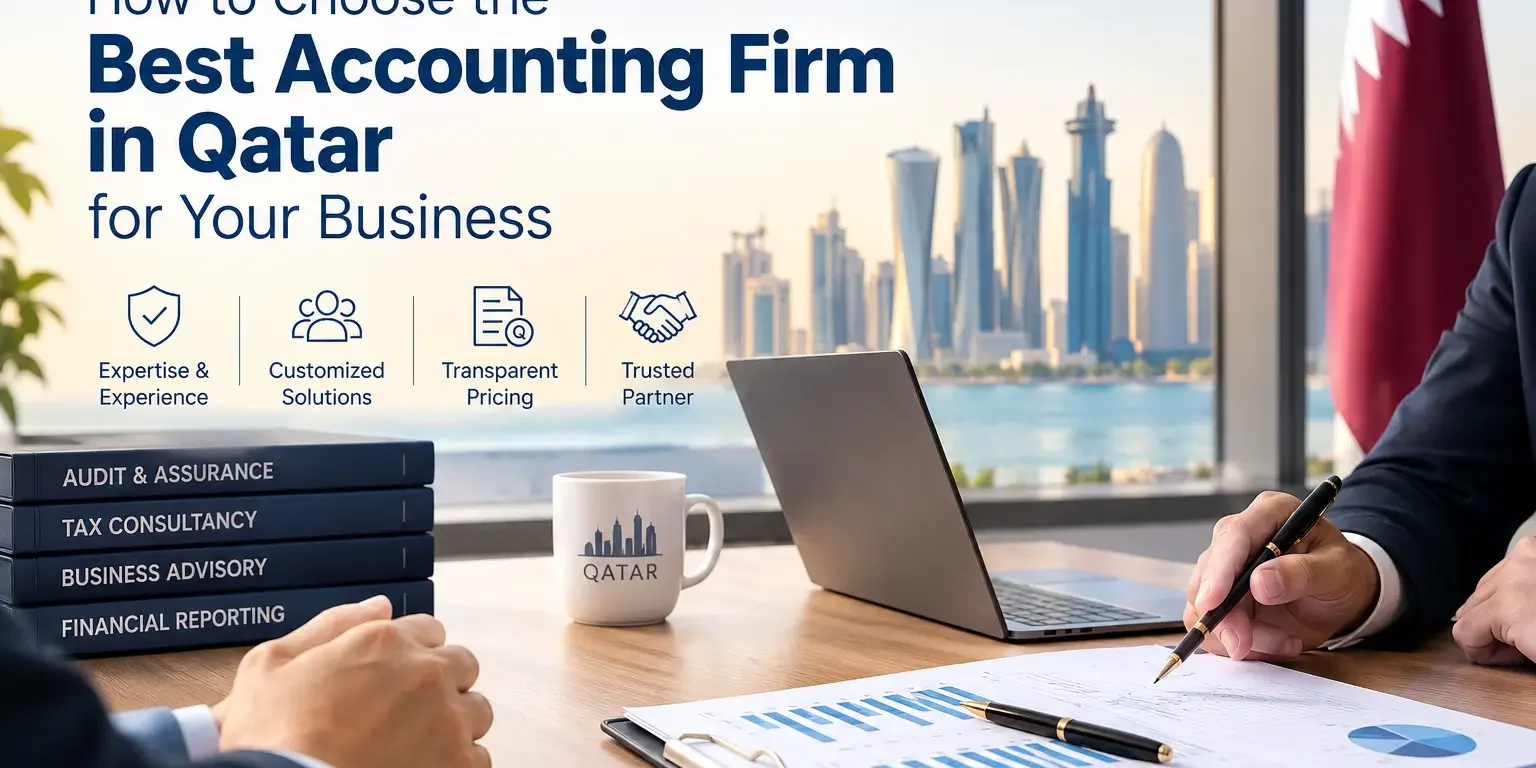
How to Choose the Best Accounting Firm in Qatar: 8 Key Factors
Not all accounting firms in Qatar offer the same quality, experience or value. Use these eight factors to compare your options.
1. Qualified and Licensed Professional Accountants
Start with credentials. Professional accountants in Qatar should hold recognised qualifications such as ACCA, CPA, CMA or CA. The firm itself should be properly licensed to operate in Qatar, and any audit work must be carried out by auditors registered with the relevant authorities. Ask who will actually handle your account, not just who leads the firm.
2. Deep Knowledge of Qatar’s Tax and Regulatory Rules
Your accountant must understand local rules in detail: corporate income tax, withholding tax, the Dhareeba e-filing system, the Commercial Companies Law, and the separate regimes that apply to Qatar Financial Centre (QFC) and Qatar Free Zones entities. A firm with local expertise will spot risks and deadlines before they become problems.
3. Industry Experience
A construction company, a retail chain and a consulting firm all have very different accounting needs. Choose a firm that has worked with businesses in your sector. Industry experience means faster onboarding, better-designed reports and practical advice that fits how your business really operates.
4. A Complete Range of Services
The best accounting firm in Qatar for you is one that can grow with you. Look for a firm that offers:
- Bookkeeping and accounting
- Financial statement preparation under IFRS
- Tax registration, planning and return filing
- Payroll processing
- Internal and external audit support
- VAT readiness and advisory
- CFO and management advisory services
Working with one firm for all of these reduces errors and gives you a single point of contact.
5. Modern Accounting Technology
Cloud accounting software such as QuickBooks, Xero, Zoho Books or an ERP like Tally or SAP gives you real-time access to your numbers. Ask which systems the firm uses, how data is shared and whether you get regular dashboards or reports you can check anytime.
6. Data Security and Confidentiality
Your financial data is sensitive. Confirm that the firm signs a confidentiality agreement, uses secure systems, controls staff access and follows clear data-protection practices.
7. Transparent Pricing
A reliable accounting company in Doha will give you a clear proposal with a defined scope and fee, whether monthly, quarterly or per project. Be cautious of quotes that seem far cheaper than the market, as they often leave out essential work that is billed later.
8. Communication and Client Support
You should know who your dedicated accountant is, how quickly they respond and how often you will receive updates. Support in both English and Arabic is a valuable advantage in Qatar. Read client reviews and ask for references before you sign.
Red Flags to Avoid When Hiring an Accounting Firm in Qatar
While comparing accounting firms in Qatar, walk away if you notice any of these warning signs:
- No clear licence or credentials for the firm or its team.
- Vague proposals with no defined scope, deliverables or deadlines.
- Promises that sound too good to be true, such as guaranteed tax savings or “no audit issues ever.”
- Slow or unclear communication during the sales process, which usually gets worse after you sign.
- No experience with Qatar-specific rules, including Dhareeba filing or QFC requirements.
- Outdated, manual systems that leave you waiting weeks for basic reports.
A few minutes of checking up front can save you months of costly corrections later.
Why Excel Consultant Is a Trusted Accounting Company in Doha
At Excel Consultant, we help businesses across Qatar keep their finances accurate, compliant and growth-ready. As a trusted accounting company in Doha, we combine local regulatory knowledge with modern technology and a personal, responsive service.
Here is what sets us apart:
- Qualified professional accountants with experience across trading, construction, hospitality, services and more.
- End-to-end services, from bookkeeping and payroll to tax filing, audit support, VAT readiness and CFO advisory.
- Cloud-based reporting, so you can view your financial position whenever you need it.
- Transparent, fixed pricing with packages tailored to startups, SMEs and established companies.
- A dedicated point of contact who understands your business and responds quickly.
- Strict confidentiality and secure handling of all client data.
Whether you are setting up a new company in Qatar or need a reliable partner to take over your accounting, Excel Consultant delivers professional accounting services in Qatar you can depend on.
Frequently Asked Questions (FAQs)
1. How much do accounting firms in Qatar charge?
Fees depend on your transaction volume, the services you need and the complexity of your business. Small businesses often pay a monthly bookkeeping fee, while audits and tax filings are usually quoted per engagement. Always ask for a written proposal with a clear scope.
2. Is it mandatory to have audited financial statements in Qatar?
Most companies registered under Qatar’s Commercial Companies Law, and businesses with foreign ownership that file tax returns, need audited financial statements prepared by a registered auditor. Requirements can differ for QFC and free-zone entities, so confirm your obligations with a qualified accountant.
3. Has Qatar introduced VAT?
Qatar has signed the GCC VAT agreement but has not yet implemented VAT. Businesses are advised to prepare early by keeping clean records and reviewing their systems, so they are ready when the rollout is announced.
4. What is the corporate income tax rate in Qatar?
The standard corporate income tax rate is 10% on taxable profits attributable to foreign ownership. Profits owned by Qatari and GCC nationals are generally exempt, although certain sectors such as oil and gas have different rules.
5. Should I outsource accounting or hire an in-house accountant?
For most startups and SMEs, outsourcing to a professional accounting firm is more cost-effective. You get a full team of specialists, built-in compliance knowledge and no recruitment or training costs.
6. What documents do I need to give my accounting firm?
Typically: your commercial registration, tax card, bank statements, sales and purchase invoices, payroll records, contracts and previous financial statements.
7. Can an accounting firm help with company setup in Qatar?
Yes. Many firms, including Excel Consultant, guide new businesses through tax registration, accounting system setup and early-stage compliance so they start on the right foot.
8. How do I know if an accounting firm in Qatar is reliable?
Check licences and qualifications, ask for client references, review online feedback and assess how clearly the firm explains its services and pricing before you commit.
Conclusion
Choosing among the many accounting firms in Qatar is not just about price. The right partner brings qualified professionals, deep knowledge of local regulations, relevant industry experience, modern technology and clear communication. Take the time to compare firms, ask the right questions and avoid the red flags above, and you will find a partner who protects your business and helps it grow.
If you are looking for the best accounting firm in Qatar to handle your bookkeeping, tax, audit support or financial advisory, Excel Consultant is ready to help.
Contact Excel Consultant today to book a free consultation and discover how our professional accountants in Qatar can simplify your finances and keep your business fully compliant.