Qatar is one of the most attractive places in the Gulf to start and grow a business. Government support for SMEs, 100% foreign ownership in many sectors, and a fast-growing private economy have created thousands of new ventures in Doha and beyond. But with opportunity comes responsibility, and nothing affects a company’s long-term health more than its finances.
That is why small business accounting in Qatar is no longer a back-office task you can push to the end of the year. Accurate books keep you compliant with the General Tax Authority, help you secure bank financing, and give you the clarity to make smart decisions every month.
In this complete guide, Excel Consultant explains what accounting services small businesses in Qatar need, the regulations you must follow, how startups should set up their finances, and how to choose the right accounting partner.
Why Small Business Accounting in Qatar Matters
Many SME owners treat accounting as a compliance chore. In reality, it is the foundation of a profitable and bankable business. Here is what professional accounting delivers:
- Regulatory compliance: Qatar’s tax framework requires proper books, IFRS-based financial statements and timely tax filings. Mistakes lead to penalties and can delay your Commercial Registration (CR) renewal.
- Healthy cash flow: Tracking receivables, payables and expenses in real time helps you avoid cash shortages, a leading cause of SME failure.
- Access to funding: Banks, Qatar Development Bank (QDB) programmes and private investors expect clean, audit-ready financial records.
- Better decisions: Monthly reports show which products, clients or branches are truly profitable.
- Investor and partner trust: Transparent numbers build confidence with shareholders, landlords and suppliers.
Understanding Qatar’s Accounting and Tax Requirements
Before choosing accounting services in Qatar, you should understand the rules that shape them. Requirements vary by ownership structure and licensing jurisdiction, so always confirm your position with a qualified advisor.
Corporate Income Tax
Qatar applies a flat 10% corporate income tax on profits attributable to non-GCC ownership. Companies wholly owned by Qatari and resident GCC nationals are generally exempt from tax, although they may still need to register and file returns depending on their size. Entities in the Qatar Financial Centre (QFC), Qatar Free Zones and Qatar Science & Technology Park (QSTP) follow their own regimes and incentives.
Tax Registration and Filing via Dhareeba
All tax registrations, returns and payments are handled online through the General Tax Authority’s Dhareeba portal. For mainland companies, the annual return is generally due within four months of the financial year-end, which means 30 April for a December year-end. Tax due is paid on the same deadline, and late filing or payment attracts penalties.
Financial Statements and Audits
Qatari tax law requires accounts to be prepared under International Financial Reporting Standards (IFRS). Many companies, including those with foreign ownership above certain capital or income thresholds, must attach audited financial statements prepared by a Qatar-licensed auditor to their tax return.
Record Keeping
Accounting books, registers and supporting documents relating to activities in Qatar must be kept in Qatar for ten years. Digital, well-organised records make audits and GTA reviews far less stressful.
Withholding Tax and Contract Notification
Payments to non-resident service providers may be subject to withholding tax, and certain contracts must be notified to the GTA. These are frequent compliance gaps for growing SMEs.
Core SME Accounting Services in Qatar
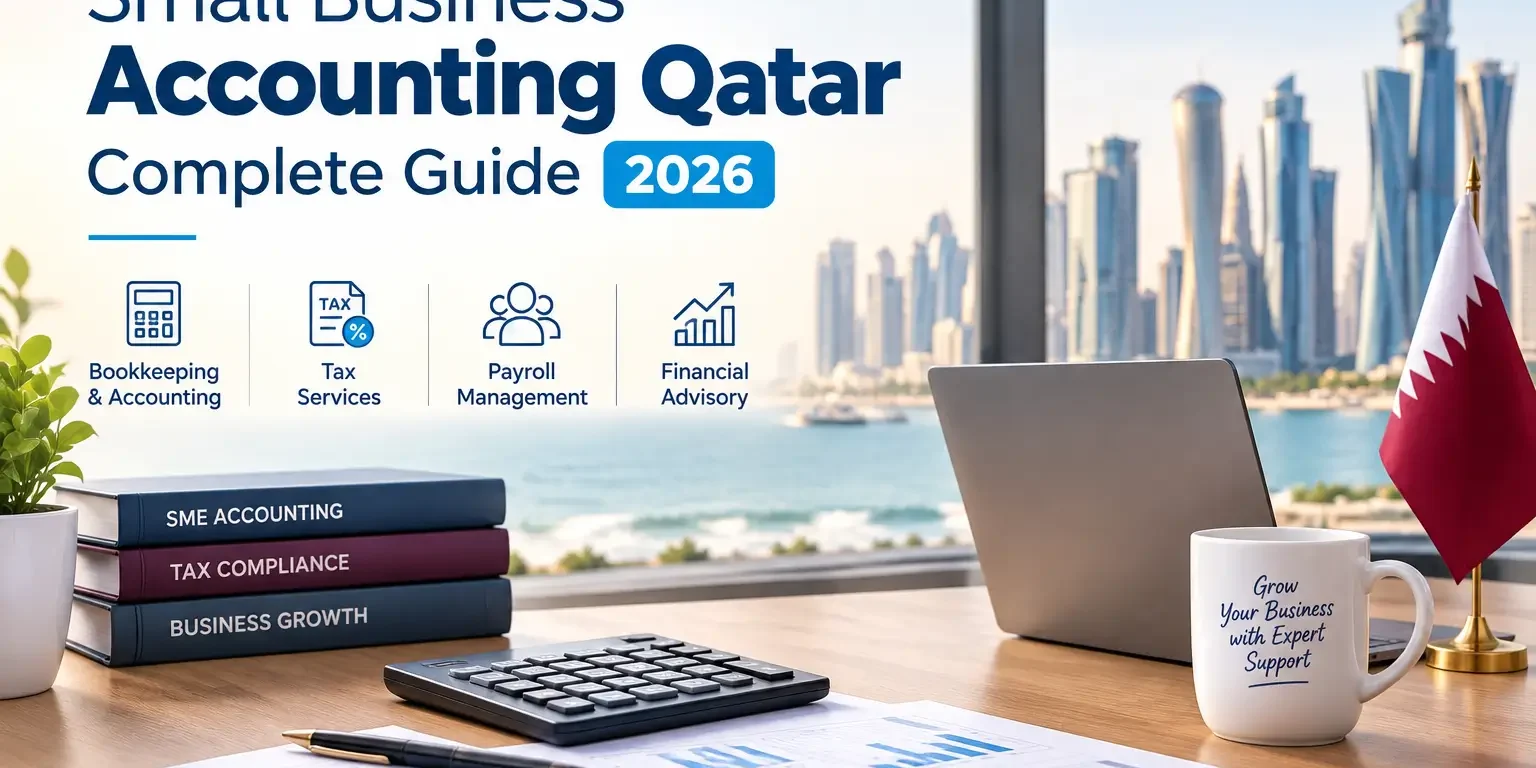
Professional SME accounting services in Qatar cover far more than data entry. A complete package typically includes:
Bookkeeping
Daily or monthly recording of sales, purchases, expenses and bank transactions using cloud software such as QuickBooks, Zoho Books, Xero or Odoo. Accurate bookkeeping is the base for every other service.
Financial Reporting
Monthly or quarterly profit and loss statements, balance sheets and cash flow reports prepared under IFRS, giving you a clear view of performance.
Tax Compliance and Advisory
Tax registration, preparation and filing of annual returns on Dhareeba, withholding tax management, and planning to legally reduce your tax exposure.
Payroll and WPS Management
Salary processing through Qatar’s Wage Protection System (WPS), end-of-service gratuity calculations, leave accruals and payslips.
Audit Support
Preparing schedules, reconciliations and documentation so your annual external audit is completed quickly and without surprises.
Budgeting and Forecasting
Budgets, cash flow forecasts and variance analysis that help owners plan expansion and manage risk.
Virtual CFO Services
Strategic financial leadership for SMEs that need senior-level insight without hiring a full-time CFO.
Accounting for Startups in Qatar
Startups face unique financial challenges, from tight budgets to investor scrutiny. Getting accounting for startups in Qatar right from day one saves time and money later.
- Choose the right jurisdiction: Mainland (MOCI), QFC or a free zone each has different tax and reporting rules.
- Open a dedicated business bank account: Never mix personal and business funds.
- Set up a cloud accounting system: Build a chart of accounts that fits your business model.
- Register with the GTA: Obtain your tax card and register on Dhareeba within the required timeframe.
- Track every expense: Keep digital copies of invoices and receipts.
- Plan for funding: Investors, incubators such as Qatar Business Incubation Center, and QDB programmes will ask for clean financials and projections.
Many founders choose outsourced accounting at this stage because it offers expert support at a fraction of the cost of an in-house team.
In-House vs Outsourced: Hiring a Small Business Accountant in Doha
Should you hire a full-time small business accountant in Doha or outsource? Here is a quick comparison:
| Factor | In-House Accountant | Outsourced Accounting Firm |
| Cost | Salary, visa, housing, benefits, gratuity | Fixed monthly fee, scalable |
| Expertise | One person’s skill set | Team of accountants, tax and audit specialists |
| Continuity | Risk during leave or resignation | Uninterrupted service |
| Technology | You buy the software | Firm provides tools and setup |
| Compliance updates | Depends on individual training | Firm tracks GTA and IFRS changes |
For most SMEs and startups, outsourcing delivers better value. Larger businesses often combine an in-house bookkeeper with an external firm for tax, audit support and advisory.
How to Choose the Right Accounting Partner in Qatar
Use this checklist when evaluating providers:
- Local expertise: Deep knowledge of GTA rules, Dhareeba, WPS and QFC regulations.
- Qualified team: Look for ACCA, CPA or CMA-certified professionals.
- Industry experience: Familiarity with your sector, whether trading, construction, retail, hospitality or tech.
- Technology: Cloud-based systems with real-time dashboards.
- Transparent pricing: Clear monthly packages with no hidden charges.
- Data security: Confidentiality agreements and secure document handling.
- Responsiveness: A dedicated account manager who answers quickly.
Why Choose Excel Consultant for Small Business Accounting in Qatar
Excel Consultant helps SMEs, startups and growing companies across Qatar keep their finances accurate, compliant and ready for growth. Our team offers:
- End-to-end bookkeeping and IFRS financial reporting
- Corporate tax registration and Dhareeba filing
- Payroll and WPS processing
- Audit preparation and liaison with external auditors
- Budgeting, forecasting and virtual CFO support
- Flexible packages designed for small business budgets
Whether you run a newly licensed startup or an established SME in Doha, we tailor our accounting services for businesses in Qatar to your size, sector and goals.
or ten years.
Conclusion
Strong small business accounting in Qatar protects you from penalties, improves cash flow and positions your company for funding and growth. With GTA enforcement increasing and Qatar’s SME sector expanding, now is the right time to put professional support in place.
Ready to simplify your finances? Contact Excel Consultant today for a free consultation and discover how our SME accounting services in Qatar can help your business grow with confidence.
Disclaimer: This article is for general information only and does not constitute tax or legal advice. Rules may change; consult a qualified professional for your specific situation.