
Audit Fees in Qatar: How Much Does an Audit Cost?
Every company in Qatar faces the same question at year-end: how much will the audit cost? Audit fees in Qatar vary widely. A small trading company may pay
Details
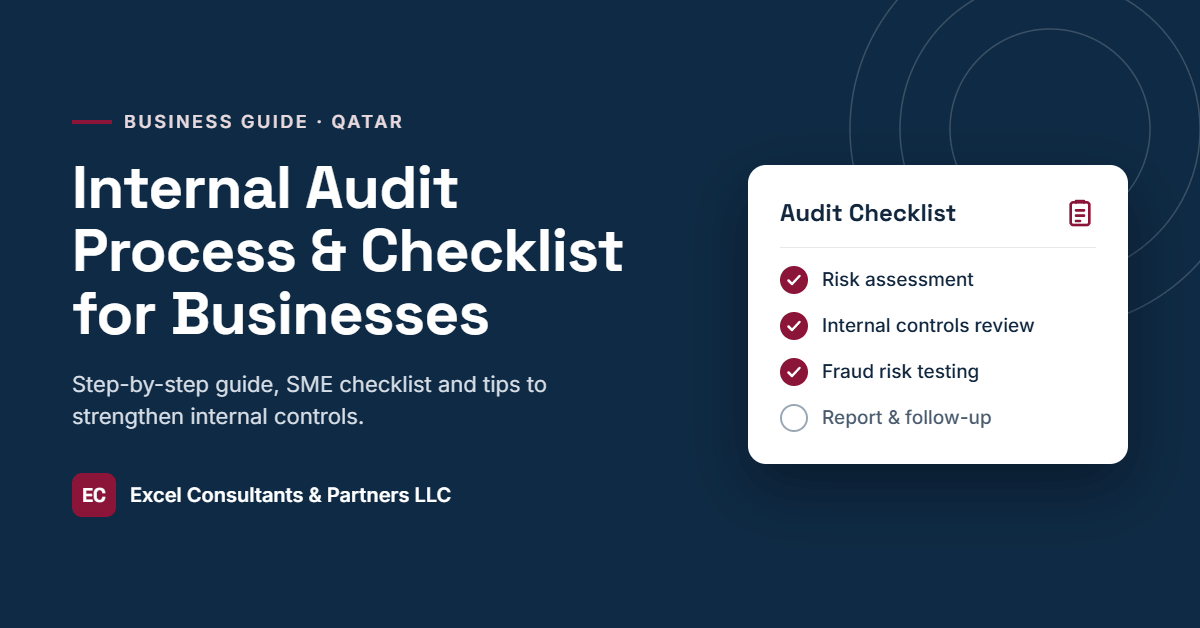
Every growing business reaches a point where the owner can no longer see every transaction. That is when small mistakes slip through, costs creep up and fraud becomes easier to hide. A clear internal audit process helps you spot these problems early, before they hit your cash flow or your reputation.
In Qatar, the pressure is rising. Regulators, banks and investors now expect stronger governance from companies of every size, not just listed groups. As a result, many business owners are asking the same question: where do we start?
This guide answers that question. Below, you will find the internal audit process step by step, a practical internal audit checklist for SMEs, and simple ways to tighten internal controls. We also explain when it makes sense to work with an internal audit consultant.
An internal audit process is a structured review of how your business really runs. It checks whether your internal controls work, whether your records are accurate and whether staff follow company policy. In short, it tells management what is working and what needs fixing.
An external audit looks backward. It gives an opinion on your financial statements once a year, mainly for shareholders, banks and authorities. An internal audit, on the other hand, looks forward. It runs throughout the year and focuses on risks, processes and controls, so you can act before problems grow.
Qatar’s business environment is changing fast. Companies face tighter compliance rules, closer scrutiny from banks and growing competition for investment. A regular internal audit helps you:
A good internal audit follows a clear path. Here is the internal audit process step by step, as most professional teams apply it.
First, decide what the audit should achieve. Do you want to test procurement, review payroll or check overall compliance? A narrow, clear scope keeps the work focused and saves time.
Next, identify the areas where things are most likely to go wrong. This is the heart of a risk-based internal audit. Instead of checking everything equally, you rank risks by impact and likelihood. Then you spend most of your effort where the danger is highest.
After that, build an audit plan. List the processes to review, the people to interview and the documents you need. Set realistic timelines and share them with department heads early, so nobody feels ambushed.
During fieldwork, auditors test how controls work in practice. They sample transactions, walk through processes and compare what staff do with what policy says. Every finding should be backed by clear evidence.
Once testing ends, the auditor writes a report. A useful report ranks issues by risk, explains the root cause and gives practical recommendations. Management then agrees on actions, owners and deadlines.
Finally, check that agreed actions actually happen. Many audits fail at this stage. A short follow-up review, usually within three to six months, makes sure the fixes stick.
Small and medium businesses do not need a 200-page manual. Instead, they need a short, practical internal audit checklist that covers the biggest risks. Use the list below as a starting point and adapt it to your sector.
Strong internal controls do not have to be expensive. In fact, a few simple habits can close most of the gaps we see in growing companies.
These steps also make your next internal audit faster, because the evidence is already in place.
Fraud rarely starts big. Usually, it begins with a small gap that nobody checks. A fraud risk assessment helps companies find those gaps before someone else does.
Most fraud grows from three conditions: pressure on an employee, an opportunity to act and a way to justify it. You cannot fully control pressure or personal excuses. However, you can remove the opportunity through better controls.
Watch for duplicate supplier payments, vendors sharing an employee’s address or bank details, and staff who never take leave. Unusual discounts, frequent manual adjustments and missing documents are also warning signs worth a closer look.
Hiring a full in-house audit team is costly, especially for SMEs. That is why many companies choose to work with an experienced internal audit consultant. Here are the main benefits of outsourcing internal audit in Qatar:
Most importantly, outsourcing lets your management team focus on running the business while experts focus on protecting it.
A well-run internal audit process gives you clarity, control and confidence. It protects your assets, reduces fraud risk and shows lenders and investors that your business is well managed.
At Excel Consultants & Partners LLC, we help companies across Qatar design and run practical, risk-based internal audits. Our team reviews your internal controls, builds a checklist that fits your business and gives clear advice you can act on right away.
Ready to take the next step? Contact Excel Consultants & Partners LLC today to book a consultation and find out where your business stands.
The internal audit process usually has six stages: setting objectives and scope, assessing risks, planning, fieldwork, reporting and follow-up. Each stage builds on the one before it.
Most businesses benefit from at least one full internal audit each year. However, high-risk areas such as cash, procurement and payroll may need quarterly reviews.
A good checklist covers finance, procurement, payroll, inventory, IT access and regulatory compliance. It should focus on the risks that matter most to your business.
A risk-based internal audit focuses time and effort on the areas with the highest risk. Rather than checking everything equally, auditors rank risks by impact and likelihood.
Start by separating key duties, setting approval limits and reviewing monthly reports. Simple written policies and regular access reviews also make a big difference at low cost.
For many SMEs, yes. An internal audit consultant brings independence, specialist skills and local knowledge, usually at a lower cost than an in-house team.
Excel Consultants & Partners LLC combines audit expertise with a strong understanding of the Qatar market. We deliver clear, practical recommendations that help you reduce risk and grow with confidence.
Qatari Business Owners, Entrepreneurs, and Business Managers get in touch with Excel Consultants & Partners LLC now for a free consultation.
Get free consultation!Every company in Qatar faces the same question at year-end: how much will the audit cost? Audit fees in Qatar vary widely. A small trading company may pay
DetailsRunning a business in Qatar means more than making sales and paying staff. Every year, most companies must prove their numbers are accurate. That proof comes from a
DetailsEvery growing business in Qatar reaches a point where someone asks a simple question. Are our numbers right, and are our controls working? Two types of audit answer
Details
Qatari Business Owners, Entrepreneurs, and Business Managers get in touch with Excel Consultants & Partners LLC now for a free consultation on Accounting Training & Education, Bookkeeping, Audit, Tax, Qatar VA, Business Plans & Feasibilities, HR Consultancy for Accounting, Qatar VAT & VAT Training, Accounting for Ecommerce, and Project Management.